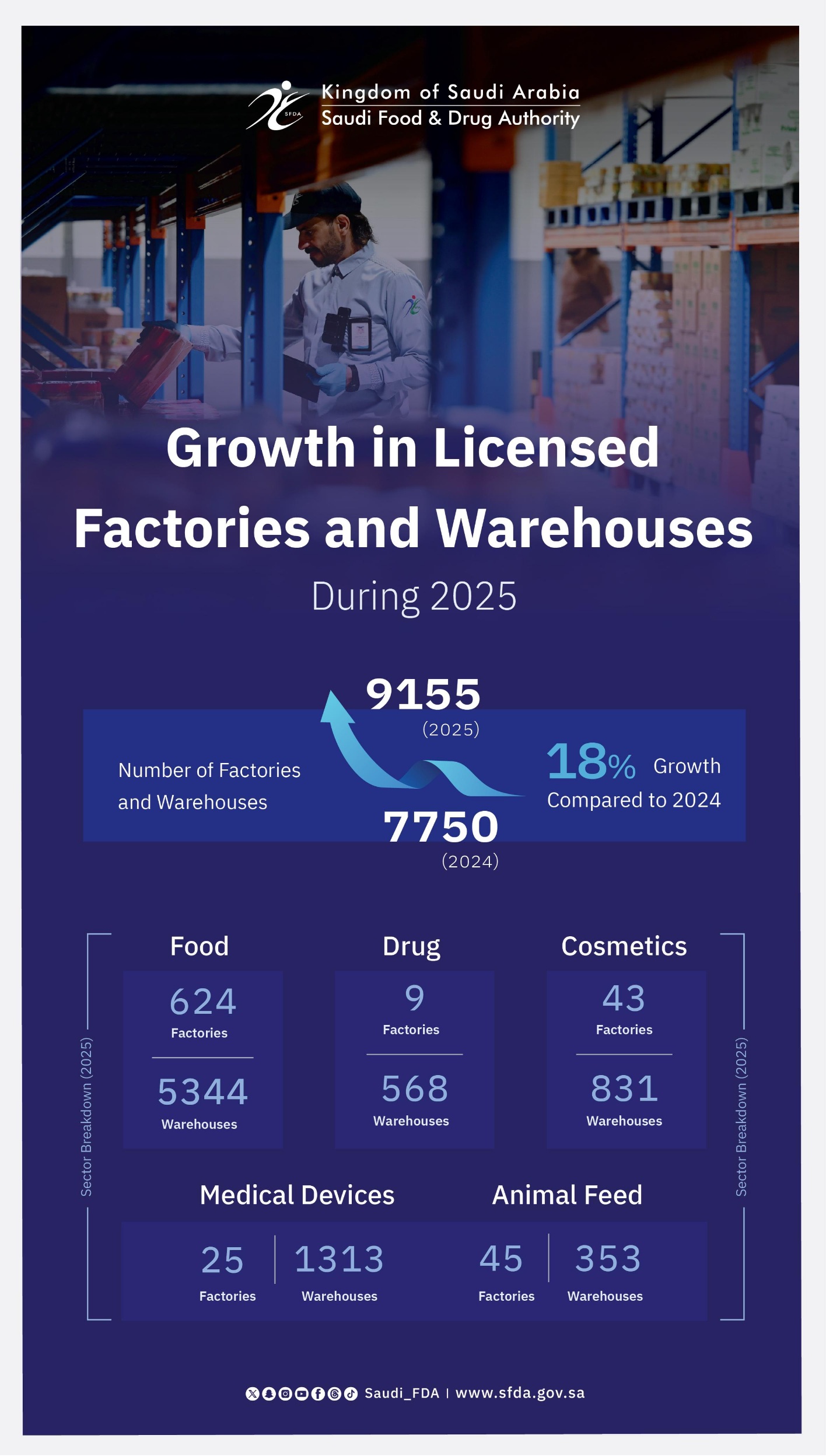
The Saudi Food and Drug Authority (SFDA) recorded significant growth in the number of licensed factories and warehouses during 2025, achieving a 18% increase compared to 2024. This growth reflects the ongoing development of the regulatory environment, the empowerment of the industrial sector, and the expansion of investment support within the SFDA’s scope of work.
According to official statistics, the total number of licensed facilities reached 9,155 in 2025, up from 7,750 in 2024.
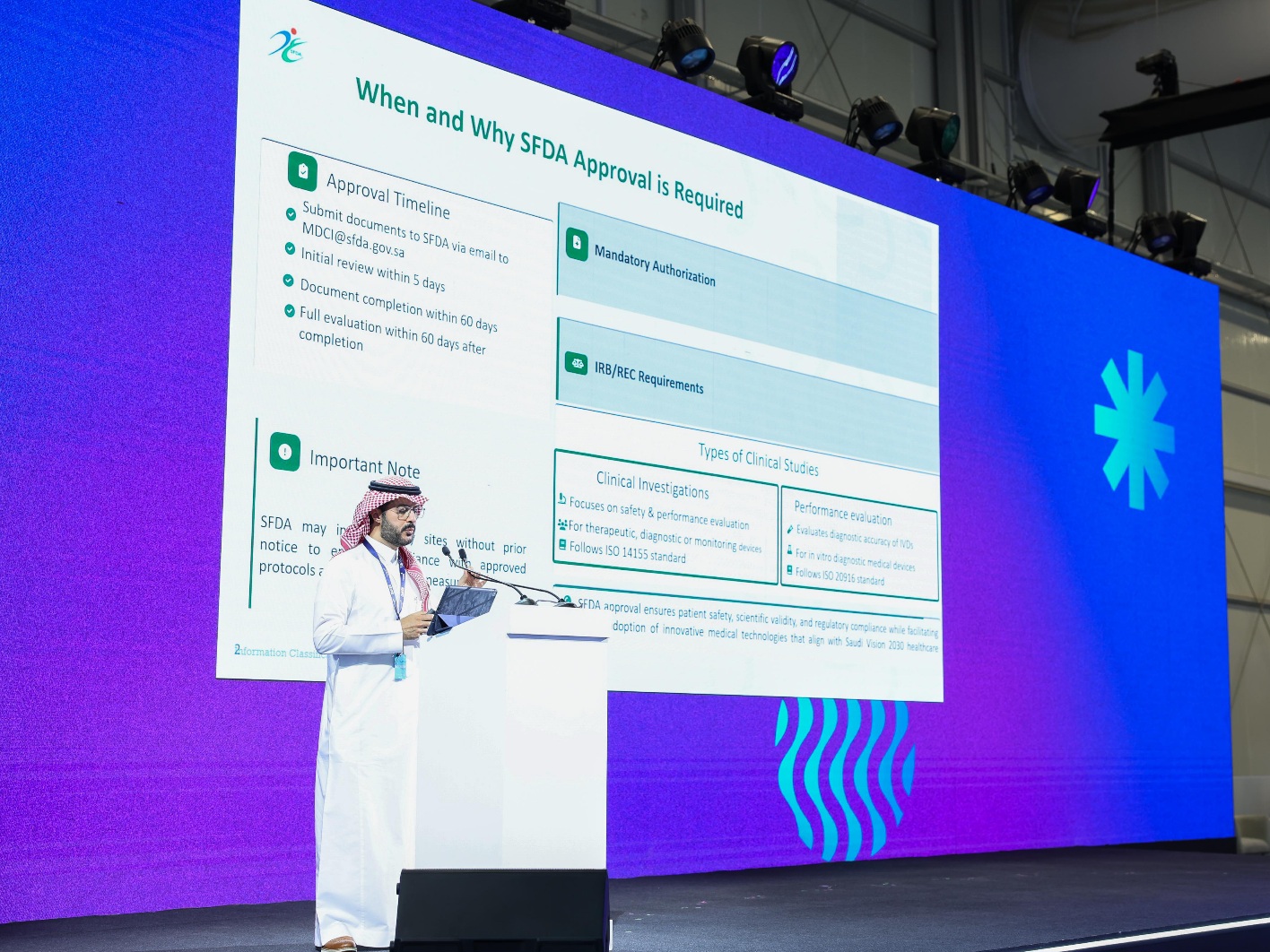
The Saudi Food and Drug Authority (SFDA) organized two specialized workshops on its Digital Health Platform as part of its participation in the Global Health Exhibition 2025, held in Riyadh under the theme “Invest in Health.” The workshops aimed to highlight leading regulatory practices in clinical trials for medical devices and in digital and emerging health technologies.
The Saudi Food and Drug Authority (SFDA) has approved an innovative biotechnology-based in vitro diagnostic test designed to aid in early detection of Alzheimer's disease by measuring a specific biomarker in blood plasma. This test represents a groundbreaking advancement in medical laboratory diagnostics, significantly enhancing the early detection of neurodegenerative diseases.
Introducing a Faster and More Accurate Diagnostic Solution
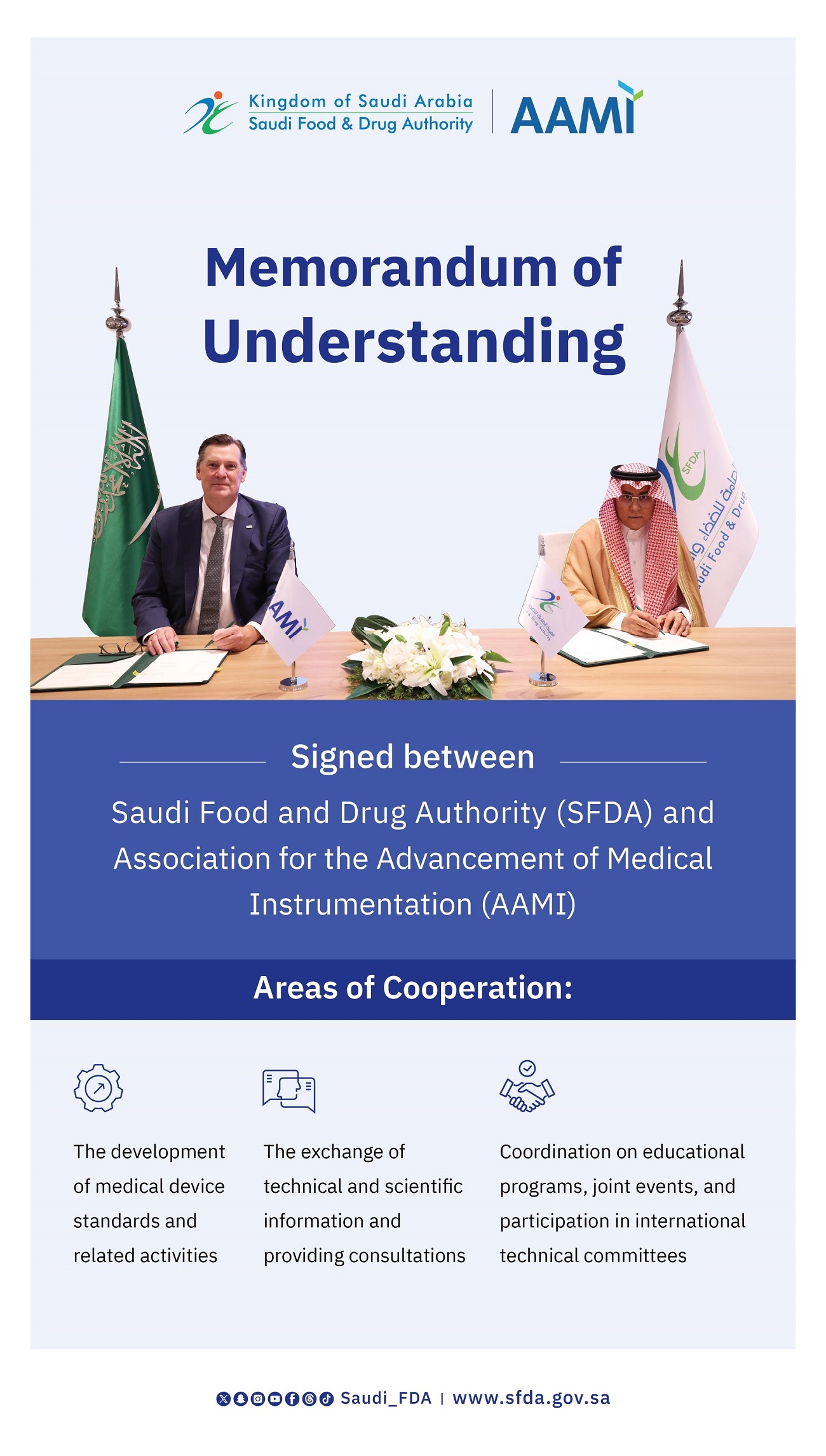
The Saudi Food and Drug Authority (SFDA) has signed a Memorandum of Understanding (MoU) with the Association for the Advancement of Medical Instrumentation (AAMI). The agreement aims to strengthen cooperation between the two organizations in the field of medical devices, focusing on advanced technologies such as artificial intelligence and biotechnology for diagnosis and treatment.
The Saudi Food and Drug Authority (SFDA) has approved a groundbreaking, Saudi-developed medical device for marketing. This innovative tool is designed to improve the safety and efficiency of surgical procedures.
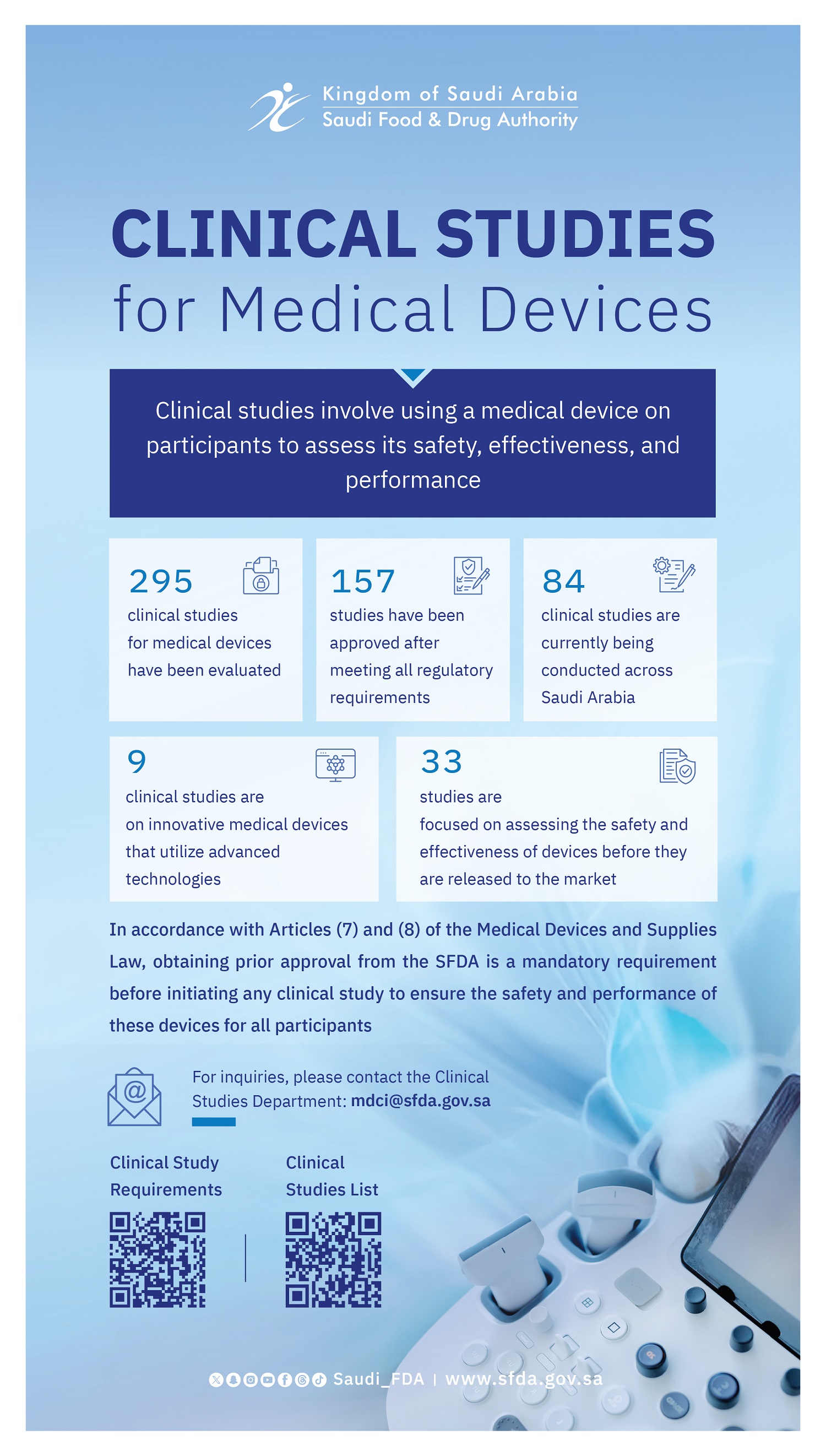
The Saudi Food and Drug Authority (SFDA) continues its efforts to regulate clinical studies for medical devices, a fundamental requirement for evaluating their safety and performance. This initiative is part of the SFDA’s regulatory and supervisory role and its commitment to strengthening its position among the world's leading regulatory authorities.
The Saudi Food and Drug Authority (SFDA) continues to drive healthcare innovation across the Kingdom of Saudi Arabia. It's doing this through a series of regulatory and technological initiatives, including advancing clinical trials, evaluating gene and cell therapies, and approving innovative medical devices. These efforts aim to enhance patient access to advanced medical technologies and position the Kingdom as a regional hub for research and innovation, aligning with Saudi Vision 2030.
The Saudi Food and Drug Authority (SFDA) has rejected a marketing authorization application in the Kingdom of Saudi Arabia for a software medical device designed to predict the likelihood of developing Type 2 diabetes within the next four years in adults over 18. This AI and machine learning-powered device, despite being marketed in some European countries, failed to meet the Kingdom's safety and efficacy requirements.